
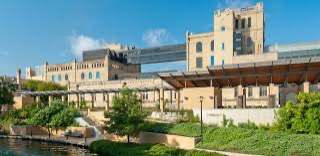
Housed in a century-old brewery building, the San Antonio Museum of Art (SAMA) rests on Jones Avenue in downtown San Antonio. The galleries are quiet, well-lit, and organized – like most art museums – by artistic period and global origin. In early February, I attended the ABA Midyear Meeting in San Antonio alongside many other YLS members. I confess to having skipped out on the breakfast mixer the first day in order to go see what San Antonio had to offer in terms of art.
When I arrived at the museum, I wasn’t expecting to see quite so many contemporary pieces as they have on collection and I was pleasantly surprised to find that they had a robust Latin American folk art collection. The energy and passion for San Antonio’s unique and vibrant Spanish colonial heritage was evident all throughout the museum. What ultimately stood out to me the most, of all the pieces in the SAMA, was John William Hilton’s Time of Growing Shadows. Painted in 1961, this oil painting plays with light and shadow, creating a luminous desertscape that shows the viewer a whole new side to the harsh desert environment.
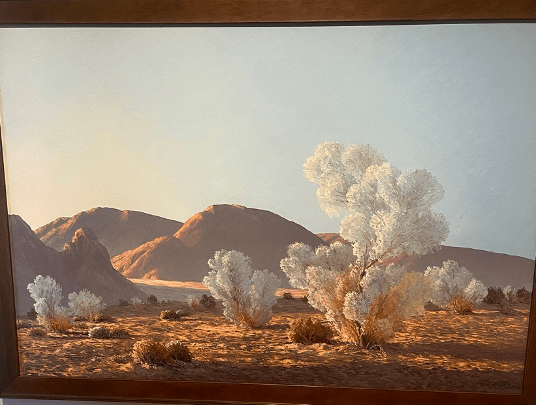
I’m an artist myself; though I wouldn’t claim to be a terribly good one. Still, I couldn’t pin the emotion this painting brought out in me right away. In fact, I came back to it several times during my visit to the SAMA. Finally, it dawned on me: it wasn’t the painting itself that was haunting me, beautiful though it was. No, it was the realization that I related to Hilton. Not because I’m a great artist (I’m not) or because I’ll have some of my works hung in museums someday (I won’t) but because I know what it’s like to take something that other people may view as harsh or hopeless and paint it in a different light. At the end of the day, isn’t that what being a lawyer is all about? Considering the world around you and advocating for your – or your client’s – way of seeing things?
Just as Hilton used light and shadow to illuminate puffy brush and rocky groundcover, I have in my practice used words to change someone else’s perspective. I can relate to that and I imagine many of my fellow young lawyers feel the same way in their practice. Sometimes trying to change perspective works and other times it’s a disaster, but when it works, it feels like Hilton’s paintings: luminous.
As I stood in the quiet gallery on Jones Avenue, I thought back to the young public defender I was at the start of my career. I thought about all the ways this profession has taught me to see things and people; more often than not in a different, kinder light. I thought of how so much of what we do in the law is quiet, unsung, hidden like the life in the desert. So much of the effort we put in to our cases, our clients and our communities exists buried in the subterranean and isn’t shown in flashy police procedural shows or talked about on NPR. So much of what we do in this field is tough and gritty and strenuous. Yet, so much of what we do is worth it.
Like Hilton, I guess I’ve grown fond of a landscape other people might think is harsh. I returned to the ABA Midyear Meeting that morning and was delighted to see the enthusiasm my fellow young lawyers held for our profession, for our practice and for our craft. I know I felt a new sense of lightness as well.

Megan N. Mitchell is a YLS Representative for District III and an education rights attorney at Abdnour Weiker.
Postscript Fun Fact: Hilton was actually close friends with President Dwight D. Eisenhower and Eisenhower even had one of Hilton’s paintings hung in the oval office.
Like what you read? Want to see more SBM YLS content? Subscribe below!
 Inter Alia