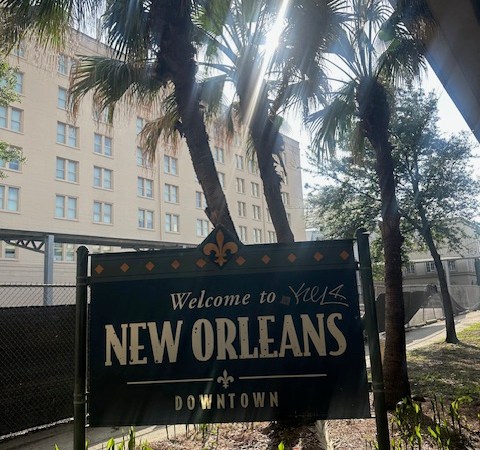
New Orleans occupies a unique place in American legal culture, often described as a city where public revelry is not only tolerated but celebrated. Yet beneath the laissez-faire image lies a structured legal framework governing public intoxication and open containers. Having just attended the American Bar Association Young Lawyer Divisions’s Spring Conference in New Orleans, a look at some of the city’s laws felt timely. For attorneys advising clients (or partying on Bourbon St.), it is crucial to distinguish myth from legal reality. It is possible to get in trouble in the Crescent City.
De Facto Tolerance, Not Legal Immunity
Unlike many jurisdictions that explicitly criminalize public intoxication, Louisiana does not have a standalone statute making it illegal per se to be intoxicated in public. However, this does not mean public drunkenness is immune from legal consequences. Under La. R.S. 14:103 (disturbing the peace), intoxicated individuals who engage in disorderly conduct—such as fighting, using offensive language in a public place, or obstructing traffic—can be arrested and prosecuted.
Funerals, specifically, have special protections, which is important because of the historic St. Louis St. Louis Cemetery just blocks from the French Quarter. In New Orleans, the municipal code (City Code §54-403) mirrors this approach, allowing for citations when intoxication results in disorderly behavior or endangers others. While public drunkenness without accompanying misconduct is often overlooked, the discretion afforded to law enforcement means that intoxicated individuals may still be subject to arrest, especially in high-tourism areas or during major events like Mardi Gras. From a defense perspective, counsel should scrutinize whether the arresting officer observed specific disruptive behavior or relied solely on apparent intoxication. Arrests lacking concrete evidence of breach of the peace may be ripe for challenge under constitutional and evidentiary grounds. That said, empirical evidence suggests that the bar is very high for conduct that will raise the attention of law enforcement.
Open Containers
New Orleans diverges significantly from other U.S. cities with its permissive stance on open containers of alcohol. Under City Code §54-404, individuals may possess and consume alcoholic beverages in public areas, provided the drink is not in a glass container. Notably, the law is written to restrict where open containers are not permitted, as opposed to designating areas where it is. This exception is largely a nod to the city’s tourist economy and cultural norms, especially in neighborhoods like the French Quarter. However, timing is everything, and there is a particular provision in City Code §54-404(e) that restricts open containers within anywhere within one block of a Mardi Gras parade route within two hours before or after the parade’s posted time. Most of the local container laws represent a practical approach to safety. Moreover, while the city allows open containers on sidewalks and in entertainment zones, this does not extend to all parts of Orleans Parish (a Parish is the equivalent to a county in Michigan). Local rules differ outside of the City of New Orleans. Establishments selling alcohol must comply with Alcoholic Beverage Outlet (ABO) permitting rules. Serving alcohol “to go” is permitted only under specific license types and regulations, and failure to adhere can result in administrative penalties or license revocation. Most establishments in the French Quarter will have the necessary licenses.
Intersection with Other Offenses
Although public drinking is generally tolerated, it can exacerbate liability in cases involving DWI, assault, or obstruction. Moreover, non-residents often wrongly assume New Orleans’ leniency extends to neighboring jurisdictions. Lawyers must clarify that nearby parishes enforce stricter ordinances, and a street-legal daiquiri in the French Quarter could result in a citation in Jefferson Parish. Notably, despite the lenience toward alcohol, marijuana remains a controlled substance in all of New Orleans – although enforcement may be relatively limited in the hustle and bustle of the Vieux Carre (“Old Square” in French, referred in the French Quarter). New Orleans’ approach to public intoxication and open containers is a blend of legal flexibility and targeted enforcement. For practitioners, understanding the city’s formal legal structure—and its informal enforcement patterns—is key to effectively advising clients and navigating potential liabilities in this legally distinctive environment.
Like what you read? Want to know more about YLS in the community? Subscribe below!

Alexander Thibodeau is an Associate at Warner Norcross + Judd who specializes in litigation ad dispute resolution in Grand Rapids, MI.

